
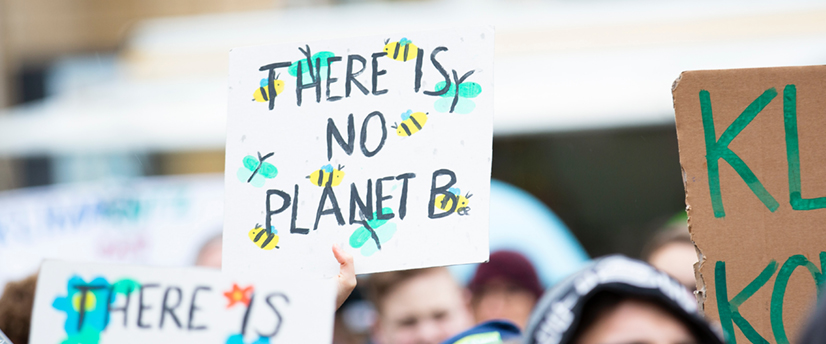


On the 5 June 2019, 143 countries took part in World Environment Day, a day focused on environmental concerns ranging from global warming to protection of wildlife. After February saw thousands of young people walking out of class to join a UK-wide climate strike, April’s Extinction Rebellion protests in London and the 16 year old climate activist Greta Thunberg getting a whole lot of air time, there is no doubt that the world we live in and how we treat it is big on everybody’s agenda.
With more people and businesses than ever looking at ways to reduce their impact on the environment, the textile industry is no different. And, with its complex supply chains, it is probably more in the spotlight than other manufacturing industries. From the obtaining of fibres to the dyes and bleaches used, and all the travel and locations involved in producing a single item, the environmental impacts of our industry should not be downplayed.
But what does all this mean to us, how does it affect our embroidery and how can we help? All questions that you may ask when thinking about what you do and its environmental impact. Although we’re sure that embroidered protest banners are definitely something we’d like to see more of, we are by no means suggesting you take to the town square with your placard and a loud speaker. However, there are a few small changes that can be made that no doubt will make a difference, and if we all took these on board then that difference could be significant!
Choose your fabrics wisely
Whilst cotton is a huge favourite for people to stitch on to, its production unfortunately requires huge amounts of water and pesticides. Switching to something more environmentally sound is not as easy as you think though, so here are a few other alternatives:
Organic cotton – So this sounds better and there are certainly no pesticides, adding to its attraction for an earth friendly substitute. But look for Fairtrade organic cotton, as cotton production is not an easy process and the Fairtrade mark ensures no workers were exploited in its production. Also, steer away from shades that are not natural – any added dyes could be taking away from the cotton’s environmental credibility.
Hemp – Not to be confused with marijuana, industrial hemp, has many qualities that make it a good alternative in the quest to save our planet. Incredibly versatile with an excellent textile fibre, it dyes easily and rarely discolours. Combine that with the fact it is naturally anti-microbial and requires way less pesticides and herbicides than cotton when grown on a large scale, and you have a great replacement fabric that our planet will thank you for.
Lotus fabric – The lengthy manufacturing process taking lotus fibre to produce lotus fabric means the downside of this is the reflective higher cost of the fabric and subsequent garments. However, the light-weight, soft, silky breathable finished fabric is very eco-friendly containing no chemicals or toxic products. That to us, is a positive that may be worth investing in.
Think about your threads
When choosing a thread, you probably think about colour and performance, but there is no reason these should be the only things you consider. The production of thread does come with many environmental questions in regard to the materials, processes and dyes used. So, when picking a thread, choose one that is certified Oeko-Tex 100. This means the brand is committed to keeping the environment cleaner and cares about the end user. Both Marathon's viscose rayon and polyester embroidery threads have achieved Oeko-Tex Standard 100 certification for environmental compliance in production.

Confidence in textiles – the Oeko-Tex Standard 100 logo
Recycle, recycle, recycle
It may seem an obvious thing as separating our waste for recycling has been part of most households for quite a few years. But when it comes to re-using items in our work we would usually throw away, it may be that we are missing a trick. Many designers and artists are now tackling the waste issue in innovative and exciting ways. Take artist Louise Baldwin for example. Louise is a textile artist using recycled materials and found objects which she combines with hand and machine embroidery to create collaged wall hangings, constructed from what she terms as "the mundane waste of domestic packaging". So next time you think about an embroidery project, why not raid the rag bag and recycle bin?
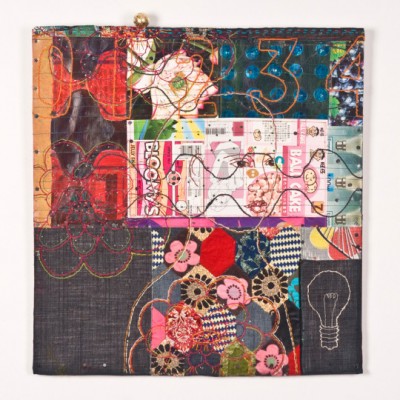
Louise Baldwin – Wednesday
Download those embroidery patterns
Digital downloads are a much more sustainable way of purchasing an embroidery pattern. Not only do they save on packaging and paper, they also reduce the carbon footprint as downloads don't involve any shipping. Obviously, you may still want to print your pattern when you've downloaded it, but you could simply opt to view on a device which gives you the added bonus of being able to zoom in and out whenever you want to! If you’ve never thought of this before, then why not have a look online and see what you can find? By being online it also means you can source patterns from all around the world too, and lots and lots available are actually free!
Become a craftivist
If all of this has resonated with you then why not check out the Craftivist Collective. This inclusive group of people are committed to changing the world one stitch at a time, using thoughtful and beautifully crafted pieces of work to "encourage others be the positive change they wish to see in the world". Founded by Sarah Corbett, they host events, workshops and have a fabulous online shop. They’ve worked with some big names over the years such as the WWF and Unicef and have proof that their ‘gentle protest’ approach really does work.

The Craftivist Collective – changing the world one stitch at a time
Product categories
Customer services
Follow us


General information
Marathon Threads (Nottingham) Ltd
Marathon House
Tavistock Avenue
Ripley
Derbyshire
DE5 3SE
UNITED KINGDOM
+44 (0)1773 741442
© Marathon Threads 2026. All rights reserved. Site by One Studio